Aviation Refueling Guide

Types of Aircraft Refueling: A Practical Guide

This guide explains the main types of aircraft refueling and the equipment behind each one. How jet fuel and AvGas get from the fuel farm into the aircraft: the main refueling methods, overwing and underwing fueling, fuel grades, quality control and how to choose the right equipment.

Ground crew fueling a light aircraft over the wing

How Fuel Reaches the Aircraft

Aviation fuel is filtered and checked every time it moves. A typical airport supply chain has four stages:

1. Receipt

Fuel arrives from the refinery by pipeline, rail, truck or ship and is filtered as it enters the airport fuel farm.

2. Storage

Fuel settles in tanks so water and sediment drop to the sump. Floating suctions draw product from near the surface.

3. Distribution

Fuel is filtered again on the way out to the hydrant system or when loading refueler trucks.

4. Into-plane

A final filtration stage on the refueler, hydrant dispenser or cabinet delivers clean, dry fuel to the aircraft.

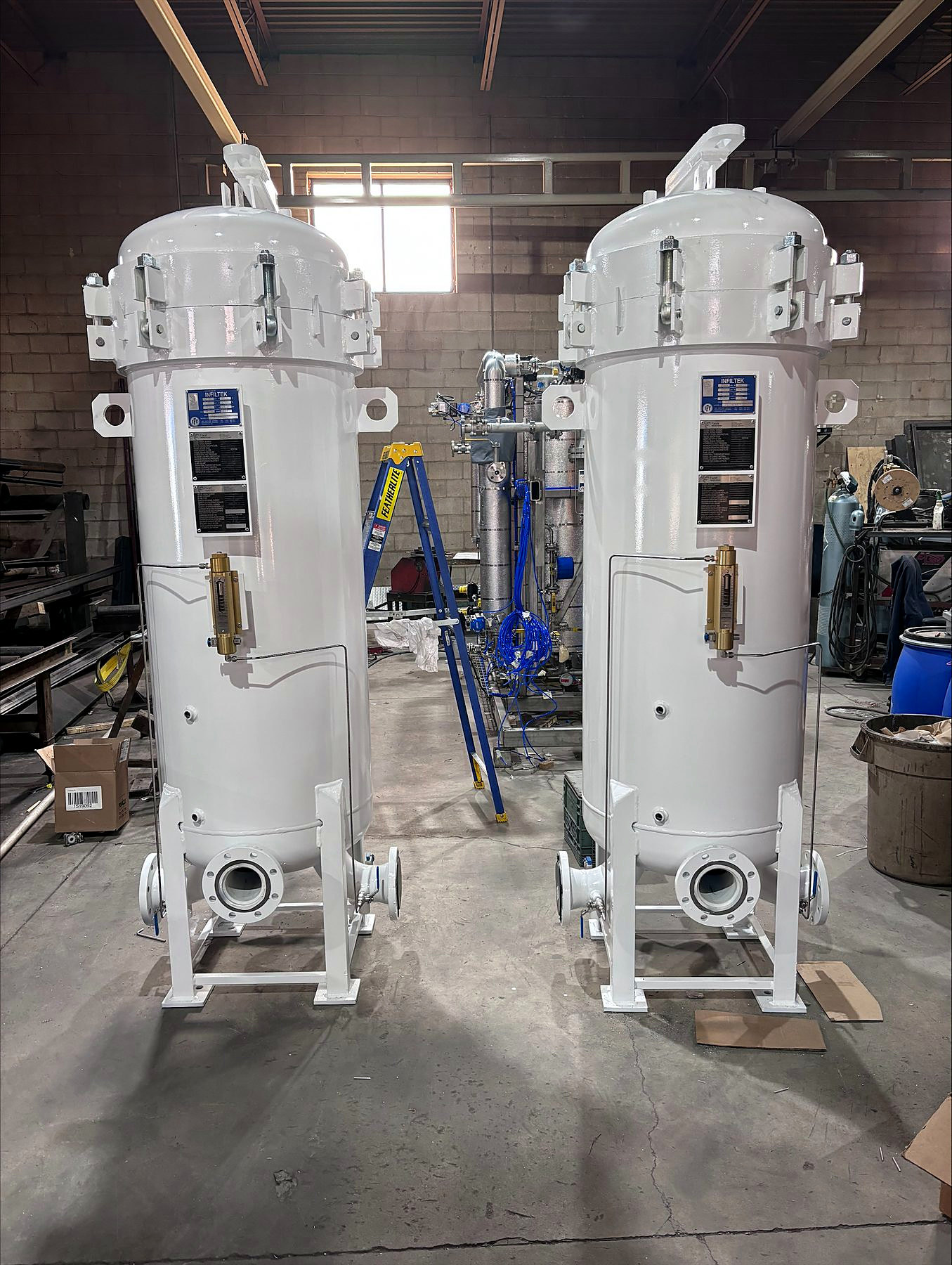
Related equipment: jet fuel filtration vessels, floating suctions and relaxation tanks.

From Refinery to Wing

How aviation fuel moves from supply to the aircraft, with quality checks at every hand-off.

  1. SupplyRefinery or pipeline ships certified fuel.
  2. ReceiptFuel is filtered and tested as it arrives at the airport.
  3. StorageTanks let water and dirt settle; floating suctions draw clean fuel.
  4. FiltrationFilter/water separators remove water and particulate.
  5. DeliveryHydrant servicers or refuelers take fuel to the aircraft.
  6. Into-planeFinal filtration, metering and bonding at the wing.

5 Types of Aircraft Refueling

Airports and operators combine these methods based on traffic, aircraft size and site layout.

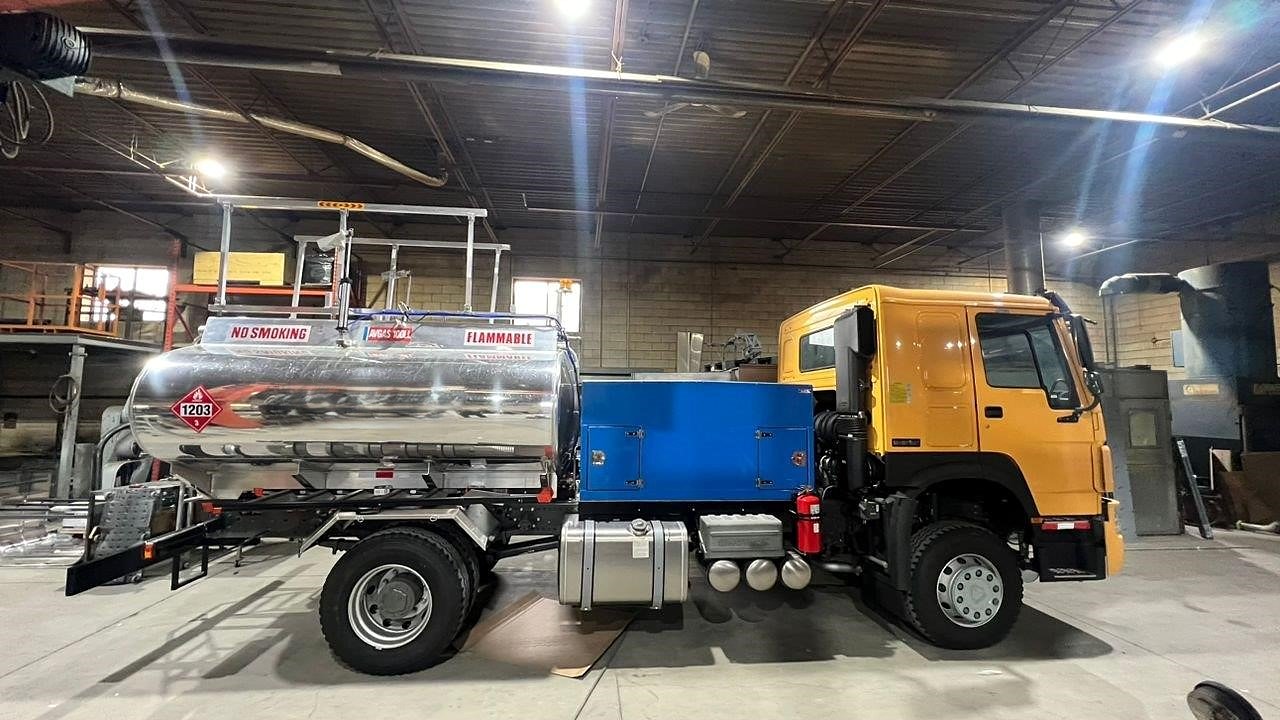
AvGas 100LL refueler truck with polished aluminum tank

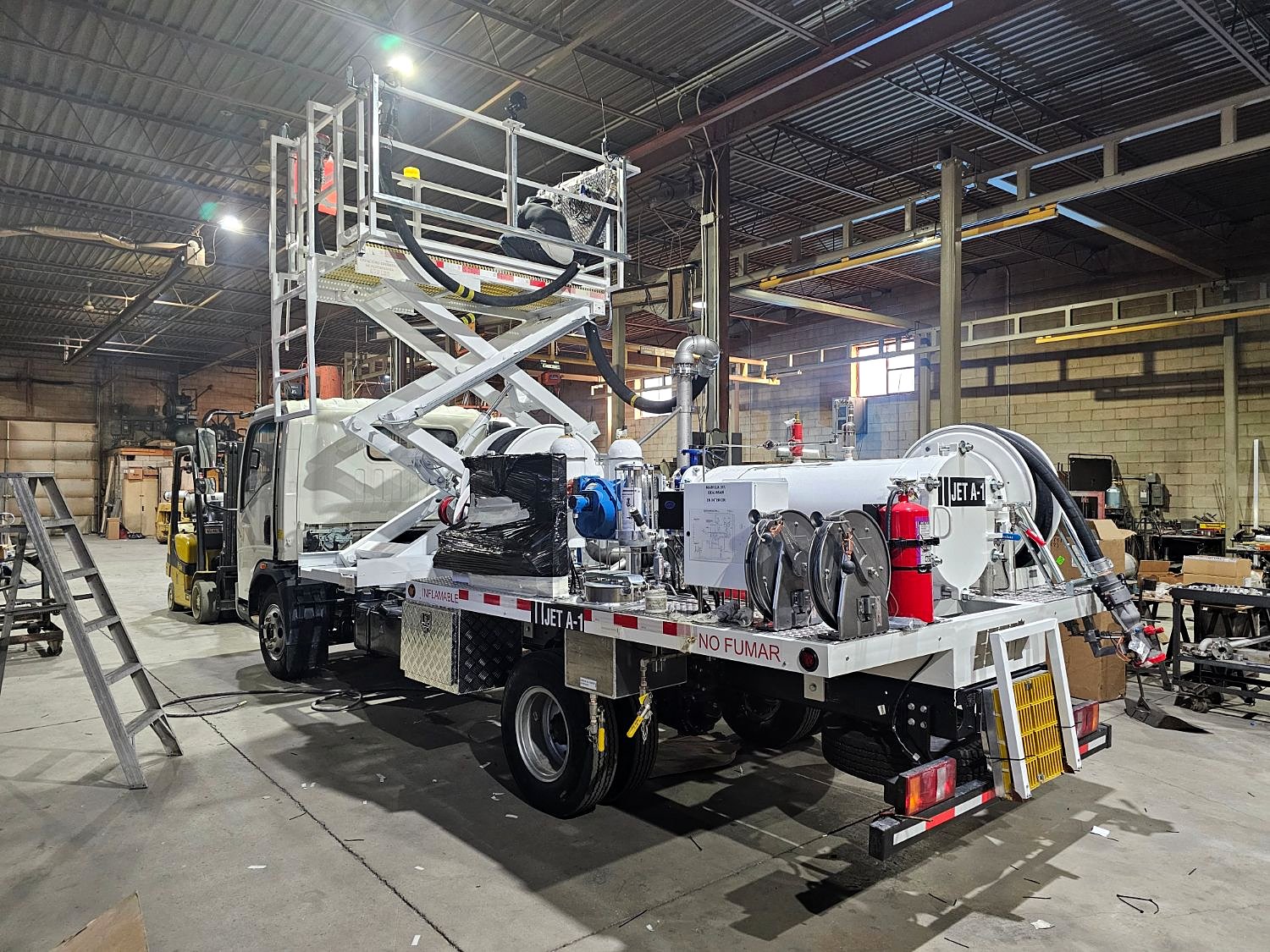
Refueler Trucks

A truck with its own tank, pump, filtration, metering and hose reels drives to the aircraft. Flexible and used at airports without hydrants, on remote stands, and for general and business aviation.

Best for: airports without hydrants, mixed fleets, remote stands

View equipment →
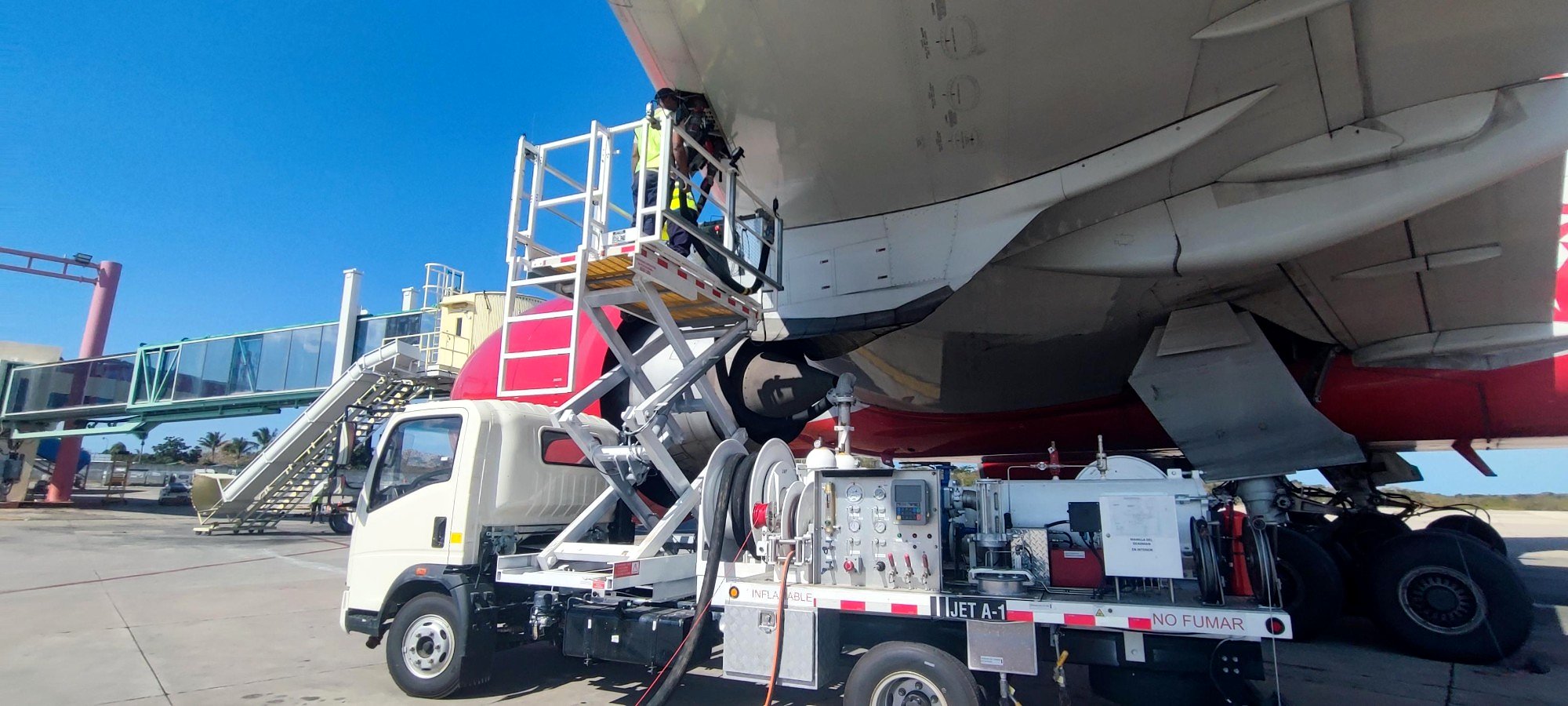
Hydrant servicer with scissor-lift platform fueling a widebody aircraft

Hydrant Fueling

Fuel is pumped from the fuel farm through underground pipelines to hydrant pits at each stand. A hydrant dispenser (servicer) connects the pit to the aircraft, filtering and metering fuel without carrying a tank.

Best for: large airports with high traffic and wide-body aircraft

View equipment →
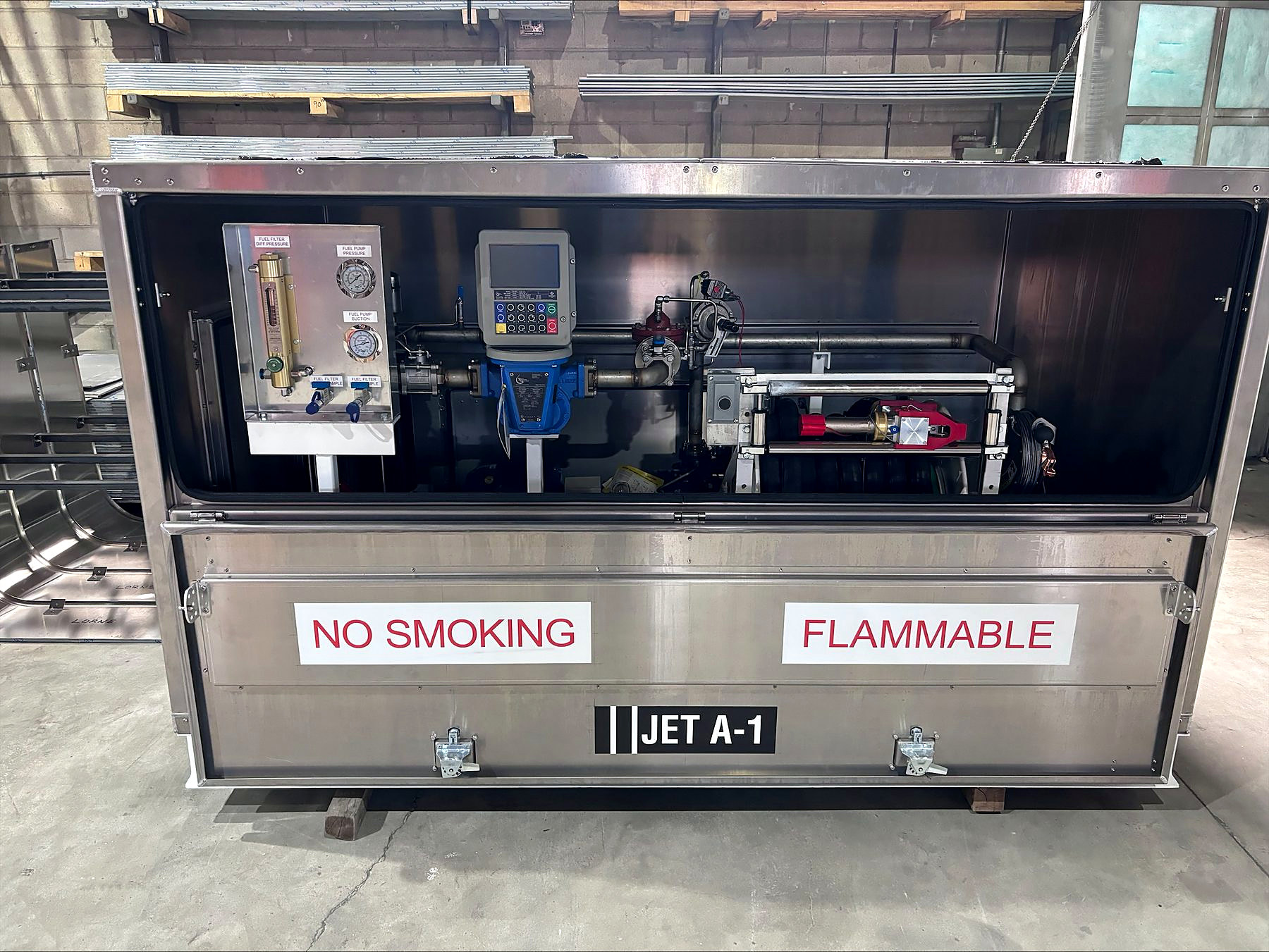
Fixed Dispensing Cabinets

Fixed Dispensing Cabinets

A fixed fueling station with pump, filtration, meter and hose reel. Aircraft taxi or are towed to it. Common at FBOs, flight schools, heliports and self-serve fuel sites.

Best for: FBOs, general aviation, helicopters, self-serve

View equipment →
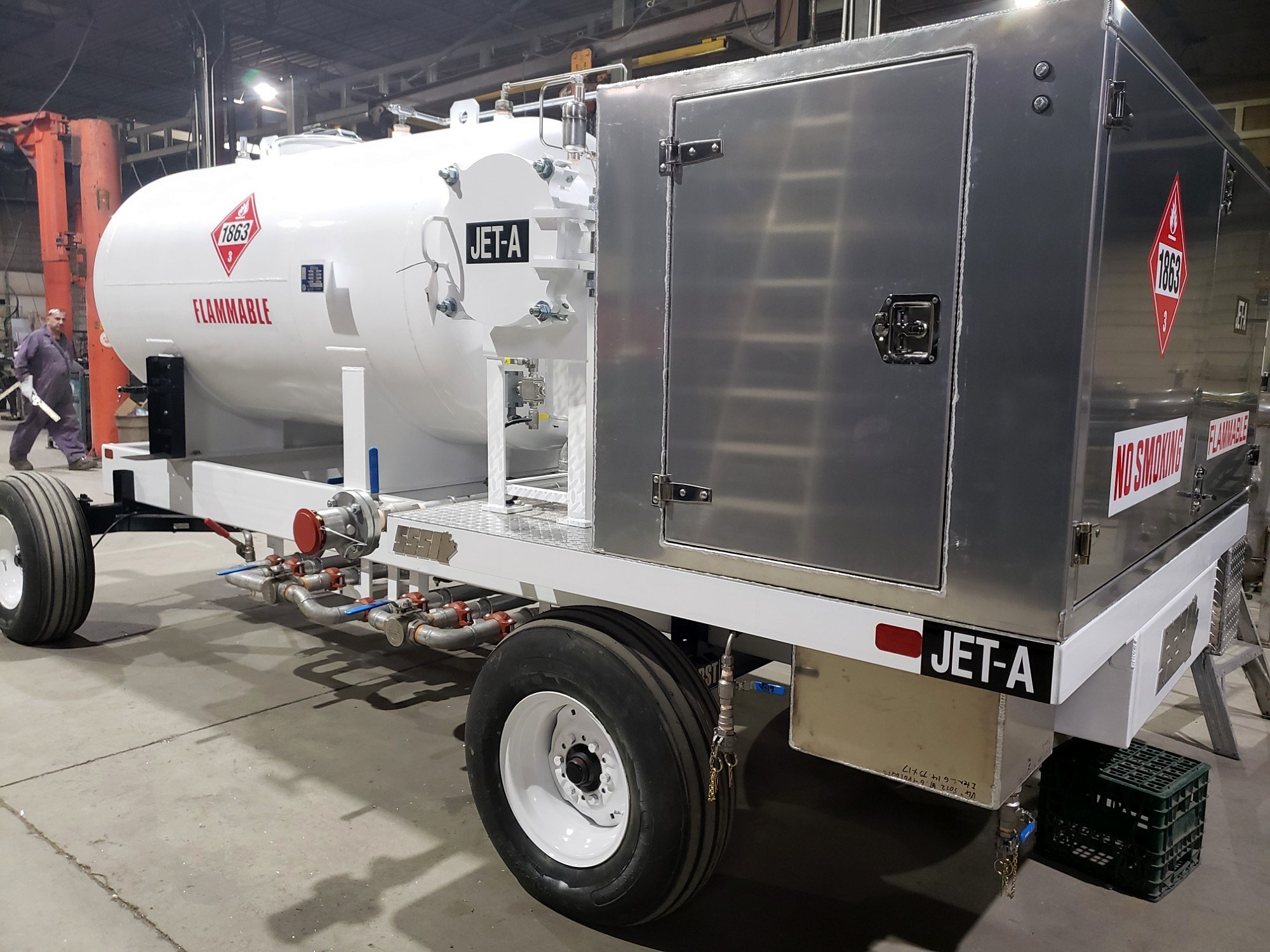
Towable Jet-A bowser cart with tank and aluminum equipment cabinet

Bowser Carts

A towable tank with pump, filtration and metering. A compact, lower-cost option for small airfields, maintenance hangars and operations with modest fuel volumes.

Best for: small airfields, hangars, low-volume operations

View equipment →
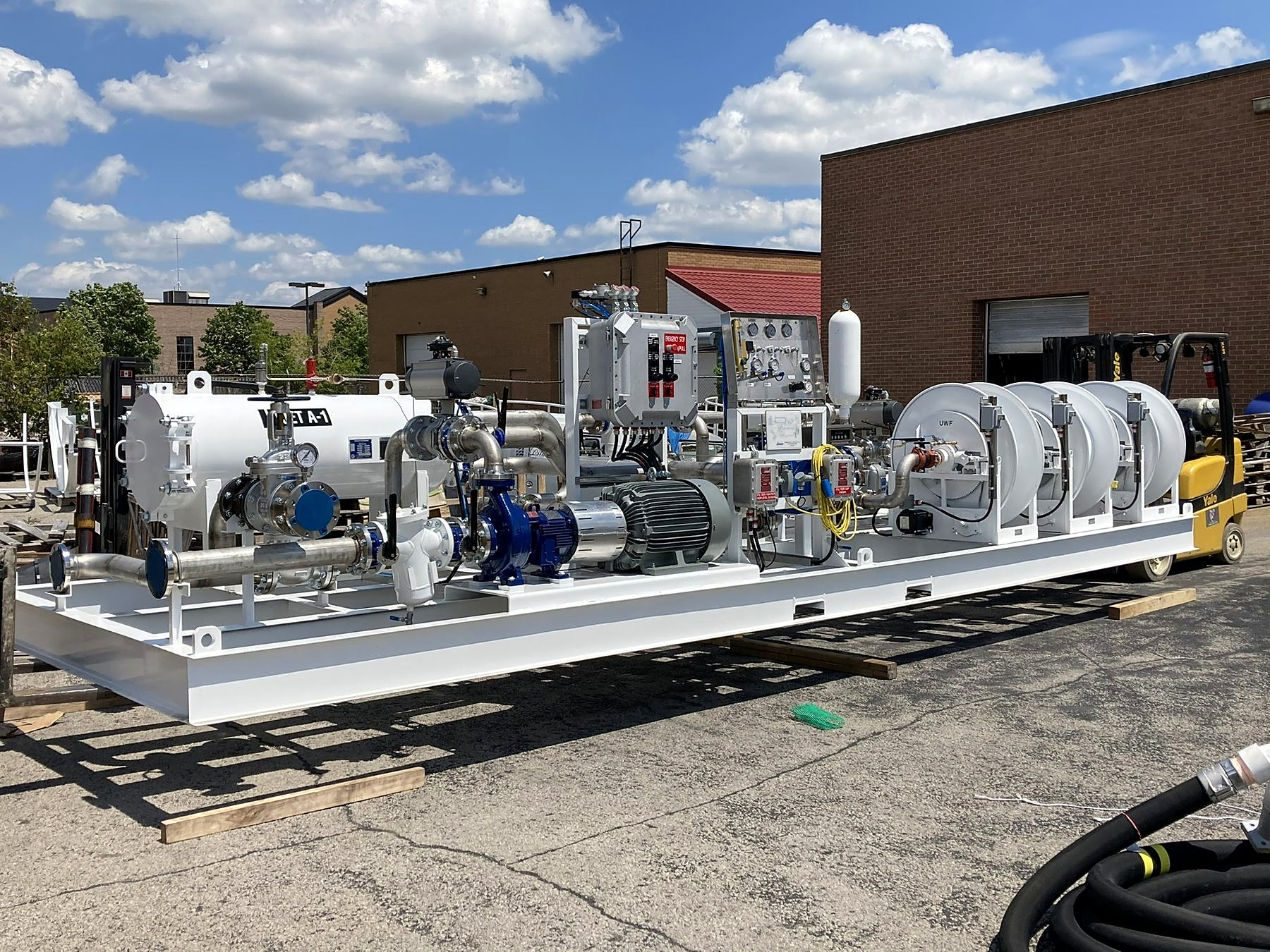
Fueling Skids

Fueling Skids

A skid-mounted dispensing or filtration package installed at a fuel farm, helipad or remote site. Built as one unit for faster installation where a full fuel system is not practical.

Best for: remote sites, heliports, fuel farm dispensing

View equipment →

Overwing vs. Underwing Fueling

Aircraft accept fuel in one of two ways, and the equipment has to match.

Overwing (gravity) fueling

A nozzle is placed into an open filler cap on top of the wing, much like filling a car. Used on piston aircraft, many turboprops and helicopters, and for AvGas. Flow rates are lower and the operator controls the fill visually.

  • Open filler cap on top of the wing
  • Lower flow rates
  • Common for AvGas and light aircraft

Underwing (pressure) fueling

A pressure coupling connects to a single-point receptacle under the wing, and fuel is pumped in under controlled pressure. Used on airliners and most business jets. Delivery pressure at the aircraft is limited, typically to about 50 psi (3.5 bar).

  • Single-point pressure coupling
  • High flow rates
  • Standard for jets and wide-body aircraft

Defueling is the reverse: removing fuel from the aircraft for maintenance, weight changes or contamination checks. Refuelers and hydrant equipment can be configured with defueling capability.

Aviation Fuel Types

Each grade is handled in dedicated, clearly marked equipment so fuels are never mixed.

Jet A

Kerosene-type turbine fuel used mainly in North America. Maximum freezing point −40 °C.

Jet A-1

The international kerosene-type turbine fuel. Maximum freezing point −47 °C, which suits long-haul and cold-weather flying.

Military jet fuels (JP-8, F-24, JP-5)

Kerosene-type fuels with military additive packages. Filtration equipment for military service is qualified to its own categories.

AvGas 100LL

Leaded aviation gasoline for piston-engine aircraft, dyed blue for identification. Never to be mixed with jet fuel.

Sustainable aviation fuel (SAF)

Renewable jet fuel blended with conventional jet fuel (up to 50% under current specifications) and handled as regular jet fuel once blended.

Fuel Quality Control

Clean, dry fuel is a safety requirement, not a preference. Standard practice includes:

Multi-stage filtration

Filter/water separators and micronic filters at receipt, distribution and into-plane stages remove water and particulate.

Daily sump drains

Water and sediment are drained from tank and filter sumps and checked before fueling begins. A product recovery tank lets clean fuel go back to storage.

Visual and chemical checks

Samples are checked to be clear and bright, and chemical water detectors confirm there is no free water.

EI Standards for Aviation Fuel Equipment

The Energy Institute (EI) publishes the specifications most airports, fuel suppliers and into-plane operators use to buy, qualify and maintain aviation fuel equipment. These are the publications that come up most often:

StandardWhat it coversRelevant equipment
EI 1581Specification and laboratory qualification of aviation fuel filter/water separators (coalescer and separator elements). Qualification categories reflect the service, such as commercial (Category C) and military (Category M), and types reflect the application, such as Type S and Type S-LW for mobile equipment.Jet fuel filtration vessels
EI 1596Design and construction requirements for aviation fuel filter vessels (the housings), used alongside pressure vessel codes such as ASME Section VIII.Filter vessels
EI 1590Specification and qualification of aviation fuel microfilters used for fine particulate removal.Micronic filters
EI 1583Laboratory tests and minimum performance for aviation fuel filter monitors. Industry guidance has been moving away from filter monitors, so check current JIG and EI requirements for your operation.Filtration vessels
EI 1541Performance requirements for protective internal coatings in aviation fuel storage tanks, piping and equipment.Coated vessels
EI 1542Identification markings for aviation fuel grades on facilities, storage and mobile fueling equipment, to prevent misfueling.Refuelers and cabinets
EI 1529Aviation fueling hose and hose assemblies: construction, testing and marking.Aviation hose and parts
EI 1540Design, construction, commissioning, maintenance and testing of aviation fuel handling facilities.Fuel farm projects
EI 1584Four-inch hydrant system components and arrangements, including hydrant pit valves and couplers.Hydrant dispensers
EI 1585Guidance on cleaning aviation fuel hydrant systems at airports.Hydrant pit cleaner
EI 1550Handbook on the equipment used to maintain and deliver clean aviation fuel, from storage to into-plane.Aviation equipment
EI/JIG 1530Quality assurance requirements for the manufacture, storage and distribution of aviation fuel to airports.Supply-chain filtration

Standards are revised periodically. Always confirm the edition and category your airport, fuel supplier or tender specifies; Lemico reviews these requirements at the start of every aviation project.

Fueling Safety Essentials

  • Bond the fueling equipment to the aircraft before connecting any hose
  • Use a deadman control so flow stops the moment the operator lets go
  • Keep emergency fuel shutoffs clear, marked and tested
  • Enforce no-smoking and ignition-source zones around fueling
  • Suspend fueling during nearby lightning activity
  • Keep spill kits and fire extinguishers ready at every fueling position

Choosing the Right Refueling Equipment

Your operationTypical equipmentWhy
Large airport, high trafficHydrant system + hydrant dispensersFast turnarounds with no fuel trucks crossing the apron
Regional airport or remote standsRefueler trucksFlexible coverage without hydrant infrastructure
FBO, flight school or heliportFixed dispensing cabinetsLow operating cost, self-serve and card-lock options
Small airfield or hangarBowser cartCompact, towable and affordable for modest volumes
Remote site or new fuel farmFueling or filtration skidBuilt and tested as one package, fast to install

Aviation Refueling FAQ

What are the main types of aircraft refueling?

The main methods are refueler trucks, hydrant fueling with hydrant dispensers, fixed dispensing cabinets, towable bowser carts and skid-mounted fueling packages.

What is the difference between overwing and underwing fueling?

Overwing fueling uses a nozzle in an open filler cap on top of the wing and suits light aircraft and AvGas. Underwing fueling uses a pressure coupling under the wing at higher flow rates and is standard for jets.

What is a hydrant dispenser?

A vehicle or cart that connects an airport hydrant pit to the aircraft, filtering and metering fuel on the way. It carries no fuel tank of its own.

What is the difference between Jet A and Jet A-1?

Both are kerosene-type turbine fuels. Jet A-1 has a lower maximum freezing point (−47 °C) than Jet A (−40 °C).

What EI standards apply to aviation fuel filtration?

The main ones are EI 1581 for filter/water separators, EI 1596 for filter vessel design and construction, EI 1590 for microfilters and EI 1541 for internal coatings. Hydrant equipment also references EI 1584 and EI 1585.

How is aviation fuel kept clean?

Fuel is filtered at every transfer point, tanks and filters are drained daily, samples are checked for water and particulate, and filter differential pressure is monitored.

Which refueling equipment does Lemico supply?

Lemico supplies aviation refuelers and bowser carts, hydrant servicers and carts, fuel dispensing cabinets, aviation skids and jet fuel filtration vessels, plus parts and project support.

Planning an aviation fueling project?

Tell us about your aircraft, fuel grades, traffic and site, and we will recommend the right mix of refueling equipment.